
A focused browser, built on a different engine.
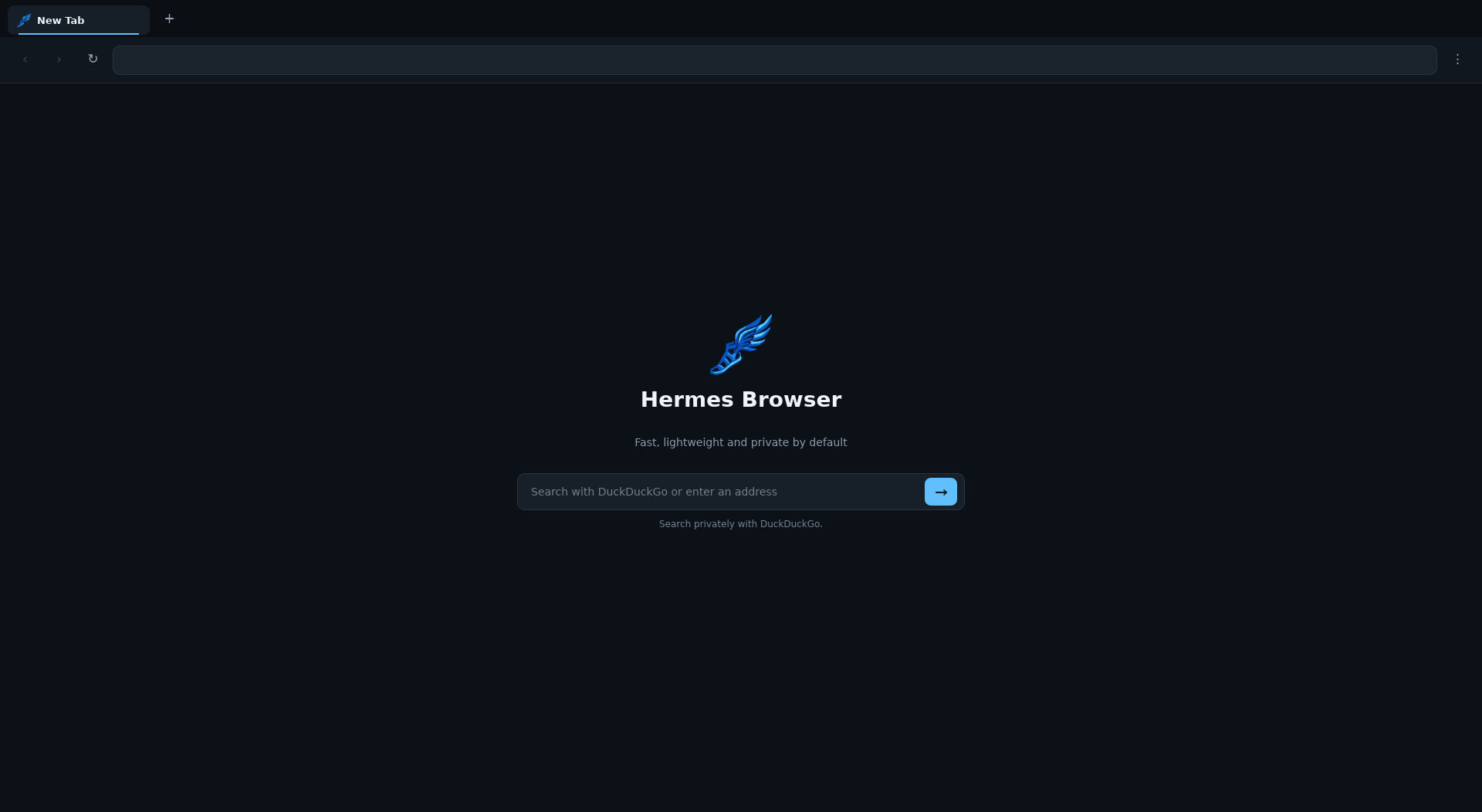
Hermes pairs Servo's independent web engine with a lightweight native Rust interface. Explore the browser today, or help shape the path toward a faster and more open web.
One project, two paths
Find the documentation written for you.
You should not need to understand Servo internals to run Hermes, and you should not need to search user tutorials for architectural decisions. Both guides live in one searchable site while staying focused on their audience.
Browse with clear expectations
Install Hermes, learn its tabs and shortcuts, set up Linux media, and understand today's privacy and compatibility boundaries.
Explore the User Guide →Understand the browser as a system
Follow commands and frames through the codebase, work safely around Servo, test changes, and maintain the project's focused patches.
Explore the Developer Guide →Built with purpose
A small browser shell with serious foundations.
Servo-powered browsing
Modern web content runs through an embeddable engine written for parallelism and memory safety.
Native desktop experience
Slint, winit, and OpenGL provide responsive tabs, navigation, keyboard input, and IME composition.
Blocking before load
Brave's default filter snapshot stops known advertising and tracking subresources at the network boundary.
Linux multimedia
Servo's GStreamer backend handles supported HTML audio, video, Web Audio, and WebRTC pipelines.
Engine-neutral core
Talaria keeps tabs, state, commands, and navigation policy testable without starting a browser engine.
Honest engineering
Known limits are documented directly, including site compatibility and the current lack of OS sandboxing.
A real browser, in progress
Native chrome. Independent web engine.
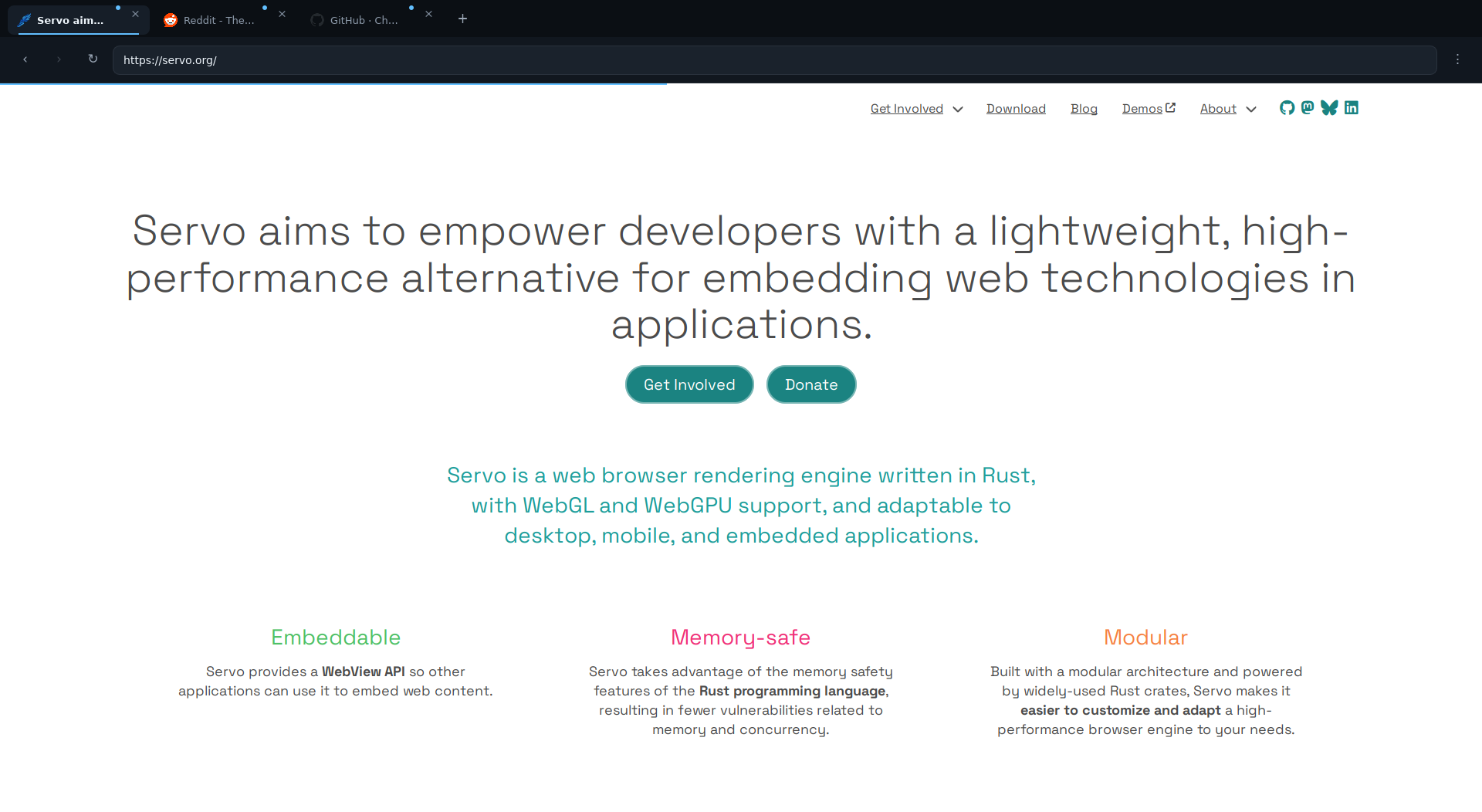
Every tab owns a Servo WebView. Hermes routes native input into the engine and brings page titles, favicons, history, loading state, and rendered frames back into a focused desktop experience.
See how the layers fit together →